Donnie’s Plumbing • Murrieta & Temecula
Water Heater Repair & Installation in Murrieta
Also serving Temecula and nearby communities.
No hot water? Leaking tank? Strange noises? As your local Murrieta plumber, Donnie’s Plumbing repairs, replaces, and installs tank and tankless water heaters throughout Murrieta, Temecula, and nearby communities. We diagnose the problem first and recommend only the work that makes sense.
Is Your Water Heater Repairable?
Often, yes. A failed thermostat, heating element, igniter, thermocouple, valve, or fitting may be worth repairing when the tank itself is still in good condition. A leaking or badly corroded tank is different: the tank body cannot be patched into a dependable long-term repair.
Common Water Heater Problems
The symptom helps narrow down the cause, but several parts can create similar problems. We test the system before recommending a repair.
Heating problem
No Hot Water
A failed heating element, thermostat, gas-control component, igniter, or pilot-related issue may be responsible.
Capacity problem
Hot Water Runs Out Quickly
Sediment, a failing component, an undersized unit, or increased household demand can shorten the available hot-water supply.
Tank warning
Water Around the Base
The source may be a fitting, drain valve, relief valve, or the tank itself. Water leaking from the tank body usually means replacement.
Sediment warning
Popping or Rumbling
Hard-water sediment can collect at the bottom of a tank and make noise as water heats beneath the buildup.
Corrosion warning
Rust-Colored Hot Water
Corrosion, a deteriorated anode rod, or rust inside the tank can discolor the hot water and should be inspected.
Pressure or valve issue
Relief Valve Discharge
A dripping temperature-and-pressure relief valve can signal a valve problem, excessive pressure, expansion, or overheating.
Repair or Replace? How We Decide
Age matters, but it is not the only factor. We look at the tank’s condition, the failed part, repair history, performance, safety, and the likely value of the repair.
Repair Often Makes Sense When:
- The unit is relatively new.
- The tank is not leaking or badly corroded.
- The failure is limited to a replaceable component.
- The heater has not needed repeated repairs.
- The repair cost is reasonable compared with replacement.
Replacement Is Usually More Practical When:
- Water is leaking from the tank body.
- Corrosion or rusty hot water is present.
- The unit is aging and performance is declining.
- Repairs are becoming frequent.
- The existing heater no longer meets the household’s needs.
Water Heater Replacement Cost
The final price depends on whether you are supplying the water heater or purchasing one through us, the size of the unit, access, venting, gas or electrical requirements, and whether any corrections are needed to meet current installation standards.
Customer-Supplied Water Heater
Already purchased your own water heater? We also install customer-supplied units. Labor costs vary depending on the size of the heater and the installation requirements, so we provide an estimate after looking at the job.
Bradford White Installation
Starting at $2,250
Our advertised installed price applies to qualifying 40- or 50-gallon Bradford White natural-gas water heaters. Larger tanks, including 75-gallon units, tankless systems, specialty models, or installations requiring additional work will cost more.
Whether you are installing a heater you have already purchased or would like us to supply one, we explain the options and provide an estimate based on the actual installation before any work begins.
Traditional Tank or Tankless?
Neither option is automatically best for every home. Budget, space, fuel supply, installation requirements, and hot-water demand all matter.
| Consideration | Traditional Tank | Tankless |
|---|---|---|
| Upfront cost | Usually lower | Usually higher |
| Hot-water supply | Stored supply can run out | Continuous hot water within the unit’s capacity |
| Installation | Often simpler for a like-for-like replacement | May require gas, venting, condensate, or electrical changes |
| Space | Requires room for a tank | Compact wall-mounted design |
| Best fit | Homeowners prioritizing a straightforward, lower-cost replacement | Homes suited to the upgrade and owners prioritizing space or continuous hot water |
When Flushing Helps—and When to Be Careful
Flushing can remove loose sediment from a healthy tank and may improve efficiency or reduce noise. In our area’s hard-water conditions, routine maintenance can be especially useful.
However, aggressively flushing a very old, neglected, or heavily corroded tank is not always wise. Sediment can sometimes be sitting around weakened metal or a deteriorated drain valve. Before flushing an older unit that has never been maintained, it is safer to consider its age, condition, and leak risk.
Why Local Water Heaters Wear Out Faster
Murrieta, Temecula, and the surrounding area have mineral-heavy water. Over time, calcium and sediment can collect inside a tank, coat heating surfaces, restrict valves and connectors, and make the heater work harder to deliver the same amount of hot water.
Common Effects of Hard Water
- Popping or rumbling from sediment buildup
- Longer recovery times
- Reduced efficiency
- More stress on valves and heating components
- Shorter useful life when maintenance is ignored
What Helps
- Periodic inspection and appropriate flushing
- Checking the anode rod when practical
- Addressing pressure problems
- Choosing the right size heater for the household
- Considering a softener when mineral buildup affects the whole home
Hard water is one factor, not the only cause of water heater failure. We look at the full condition of the unit before recommending maintenance, repair, or replacement.
Installation and Code Details
A replacement is more than connecting a new tank. The installation must account for location, fuel type, venting, combustion air, pressure, drainage, restraints, clearances, and manufacturer instructions.
Tank Installation
We help select the appropriate capacity, remove the old unit, install the replacement, make the necessary water and fuel connections, and address applicable safety and code requirements.
Tankless Installation
Tankless work may require careful gas-line sizing, venting, condensate disposal, isolation valves, electrical service, and verification that the chosen unit can meet household demand.
Older installations may need corrections such as updated venting, restraints, shutoffs, drainage, or expansion control. We explain required work before proceeding.
Recent Water Heater Projects
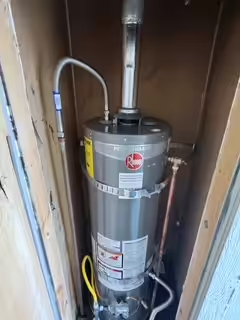
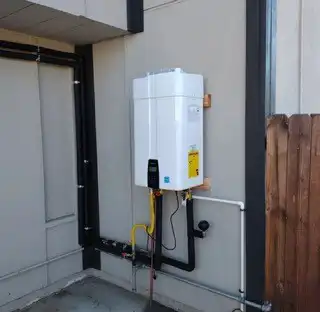
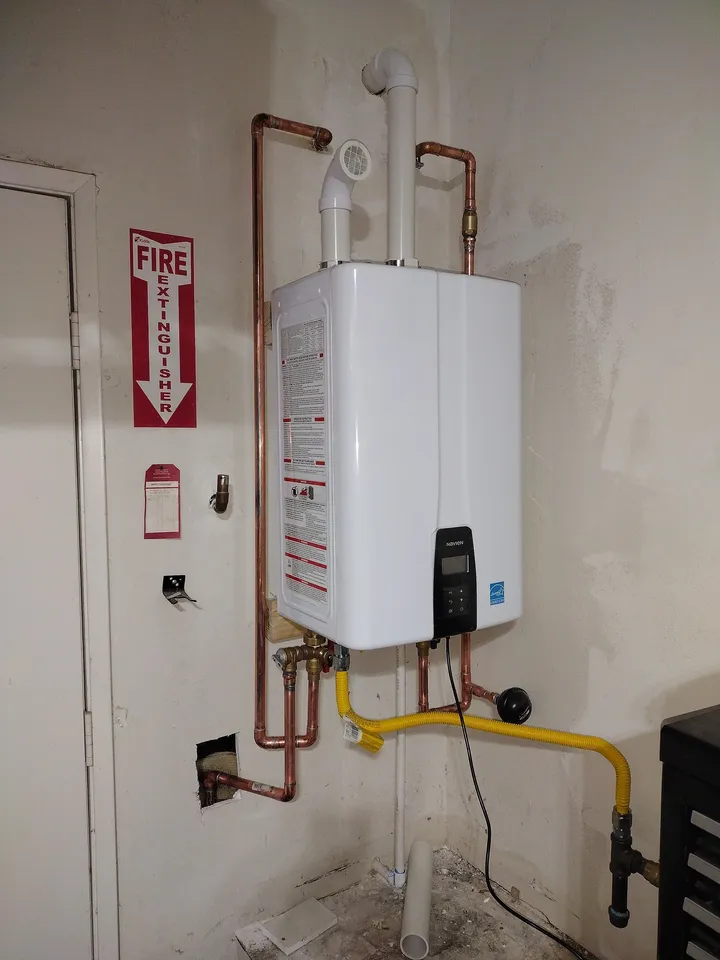
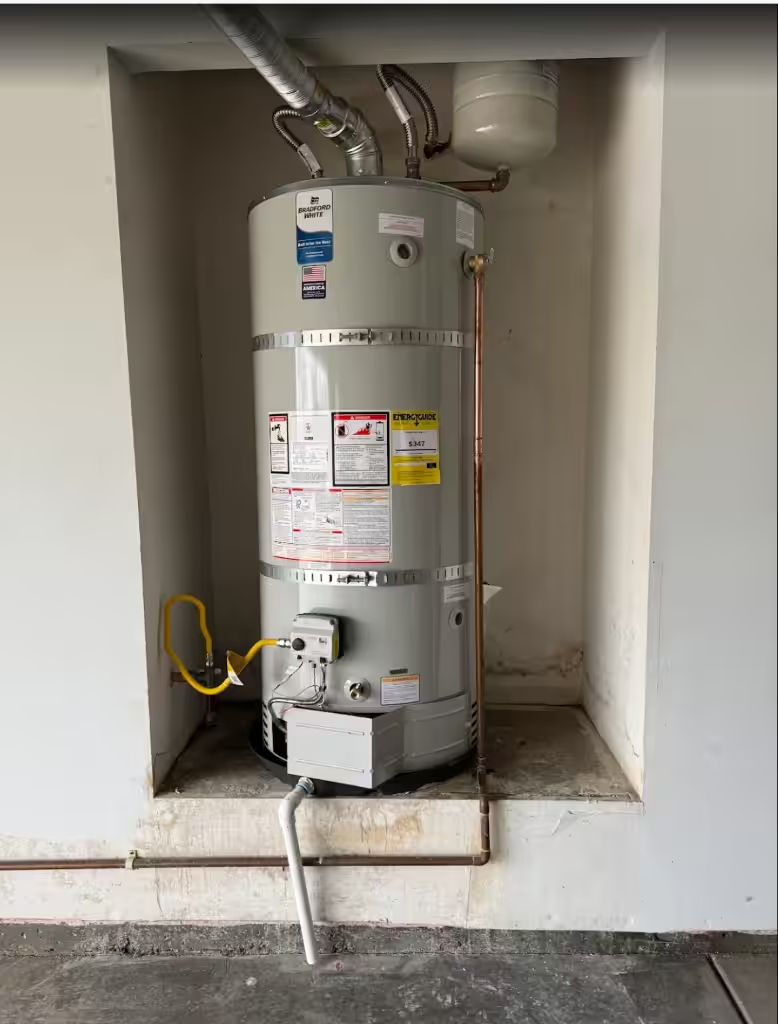
These are real examples of water heater work completed for local customers in Murrieta, Temecula, and nearby communities. They show the care that goes into the finished installation—not just the new unit itself.
Tankless Water Heater Installation
A completed wall-mounted tankless installation showing the compact setup and finished connections.
Updated Installation Connections
A real installation showing the plumbing, venting, restraints, and surrounding details that matter during replacement.
Customer-Shared Installation
A completed water heater job photographed by one of our local customers after installation.
Hot-Water Pressure Problems
When cold-water pressure is normal but the hot side is weak, the restriction may involve the heater’s shutoff valve, sediment, flex connectors, internal components, or the hot-water piping. For pressure problems affecting both hot and cold fixtures, see our low water pressure guide.
Water Heater FAQs
How long does a standard water heater installation take?
Many straightforward tank replacements can be completed in a few hours. Additional plumbing, venting, access, or code work can make the job take longer.
How long should a tank water heater last?
There is no exact expiration date. Water quality, maintenance, installation, usage, tank condition, and repair history all matter. Age should be considered together with the unit’s actual condition.
Why does my water heater make popping sounds?
Sediment at the bottom of a tank can trap water that makes popping or rumbling noises while heating. The appropriate response depends on the tank’s age and condition.
How often should a water heater be flushed?
Maintenance needs vary with water quality and usage. In a hard-water area, many tanks benefit from regular inspection and periodic flushing, but an older neglected tank should be evaluated before the drain valve is disturbed.
Does a leaking water heater always need replacement?
No. Water may be coming from a fitting, drain valve, flex connector, or relief valve. If the tank body itself is leaking, replacement is generally required.
Are tankless water heaters worth the higher cost?
They can be a good fit for homeowners who value space savings and continuous hot water, provided the home can support the installation requirements. They are not automatically the most economical choice for every property.
Why does my pilot light keep going out?
The cause may involve the thermocouple or flame-sensing system, gas-control components, airflow, venting, or another safety-related issue. Repeated pilot failure should be diagnosed rather than repeatedly relit without finding the cause.
Related Plumbing Topics
If you’re still trying to figure out what’s going on, these articles might point you in the right direction.
Low Water Pressure
Compare whole-house pressure problems with restrictions that affect only the hot-water side.
Read the Water Pressure Guide →Leak Detection
Moisture near a heater is not always coming from the tank. Learn about finding hidden plumbing leaks.
Learn About Leak Detection →Need Water Heater Help?
Donnie’s Plumbing handles water heater troubleshooting, repairs, tank replacements, tankless installations, maintenance, and installation corrections in Murrieta, Temecula, and nearby communities. We inspect the problem, explain the options, and recommend only the work that makes sense.