Home Plumbing Guide
Low Water Pressure in Murrieta & Temecula Homes
Weak showers, slow faucets, and appliances that take longer to fill can all point to a water-pressure problem. The cause may be as simple as mineral buildup in one fixture—or as serious as a hidden leak or failing pressure regulator.
Sudden or gradual?
Hot, cold, or both?
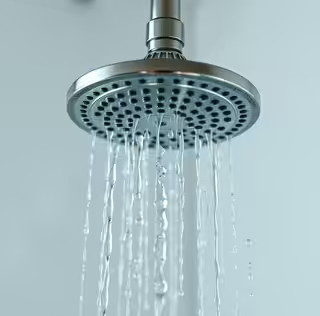
What Causes Low Water Pressure?
Sometimes the solution is as simple as cleaning a clogged aerator. Other times, low pressure can be an early warning sign of a hidden leak, failing pressure regulator, mineral buildup, or aging plumbing. The first step is figuring out whether the problem affects one fixture or the entire home.
Start Here: Is It One Fixture or the Whole House?
This is the quickest way to narrow down the problem. Low flow at one sink or shower usually points to a localized restriction. Weak pressure throughout the home suggests an issue with the incoming supply, a shutoff valve, the pressure regulator, a leak, or the piping itself.
Only one fixture is weak
- Clogged faucet aerator
- Mineral buildup in a showerhead
- Worn faucet cartridge
- Partially closed fixture shutoff
The whole house is weak
- Failing pressure-reducing valve
- Partially closed main shutoff
- Hidden plumbing leak
- Restricted or aging pipes
Common Causes of Low Water Pressure
Localized problem
Clogged Aerators or Showerheads
If the problem is limited to one sink or shower, hard-water minerals may be blocking the small openings where water exits. Cleaning or replacing the aerator or showerhead may restore normal flow.
Common locally
Hard-Water Mineral Buildup
Mineral-heavy water can leave scale inside fixtures, valves, water heaters, and other plumbing components. When several fixtures gradually lose flow, buildup may be part of the problem.
Whole-house issue
Pressure Regulator Problems
Many homes use a pressure-reducing valve, or PRV, to control the pressure entering the house. A failing or incorrectly adjusted PRV can cause low, high, or inconsistent pressure throughout the home.
Needs attention
A Hidden Leak
A leak can reduce available pressure because water is escaping before it reaches your fixtures. A higher water bill, damp flooring, warm spots, mildew smells, or running-water sounds are reasons to schedule professional leak detection.
Check after repairs
A Partially Closed Shutoff Valve
If the pressure changed after plumbing work, a main or fixture shutoff may not have been fully reopened. Do not force an old valve; older valves can begin leaking or break when moved.
Long-term problem
Aging or Restricted Pipes
Older pipes can develop internal corrosion, scaling, or restrictions. If the entire home has gradually lost pressure, the plumbing system may need a closer inspection.
What About High Water Pressure?
High pressure is a different problem, but it can involve the same pressure-reducing valve. Signs may include banging pipes, frequently leaking fixtures, running toilets, or supply lines that fail sooner than expected. This article stays focused on diagnosing low pressure, but pressure that seems unusually strong or causes repeated plumbing problems should also be tested rather than guessed at.
Is the Hot Water Pressure Worse Than the Cold?
When only the hot side is affected, the restriction may involve the water heater, its shutoff valve, sediment buildup, or the hot-water piping. Our water heater installation and repair page explains other warning signs to watch for.
What You Can Check Safely
A few observations can help narrow down the cause before a service visit:
- Check whether the problem affects one fixture or the whole home.
- Compare hot-water pressure with cold-water pressure.
- Clean an accessible faucet aerator or showerhead.
- Look for visible leaks under sinks and near the water heater.
- Ask a nearby neighbor whether their pressure is also low.
- Confirm a shutoff valve is open only if it moves easily—never force an old valve.
When Low Pressure Needs Faster Attention
Call a plumber sooner when low pressure appears with any of these warning signs:
- A sudden increase in the water bill
- Warm or damp spots on the floor
- Water stains, moisture, or mildew odors
- The sound of water running when everything is off
- A sudden pressure drop throughout the home
- Little or no pressure only on the hot-water side
These signs can point to a hidden pipe or slab leak. The goal is to locate the problem accurately before walls or flooring are opened unnecessarily.
Low Water Pressure FAQs
Can hard water reduce water pressure?
Yes. Mineral scale can restrict aerators, showerheads, valves, water heaters, and other plumbing components. The effect is often gradual rather than sudden.
Why is my shower weak when the other faucets are fine?
The showerhead, cartridge, or mixing valve is more likely to be the problem when the rest of the home has normal pressure.
Can a leak cause low pressure?
Yes. Escaping water can reduce the flow available to fixtures. A sudden pressure drop combined with a higher water bill or moisture should be checked promptly.
Can low water pressure damage appliances?
Low pressure can cause washing machines, dishwashers, ice makers, and other water-using appliances to fill slowly or perform poorly. The underlying cause matters more than the symptom itself.
Is low water pressure an emergency?
Usually not. It becomes more urgent when the pressure drops suddenly throughout the home or appears with signs of a hidden leak.
Related Plumbing Topics
Low water pressure is often a symptom rather than the actual problem. If your diagnosis points toward one of the issues below, these guides explain each topic in more detail.
Hidden Leaks
If your pressure suddenly dropped and your water bill increased, a hidden leak may be the cause.
Water Heater Issues
If only your hot water has poor pressure, the water heater or hot-water plumbing could be responsible.
Hard Water
Mineral buildup can slowly reduce water flow through fixtures, valves, and appliances.
Need a Local Plumber?
If you can’t determine the cause, we can inspect your plumbing system and explain exactly what’s going on.
Need Help Finding the Cause?
Donnie’s Plumbing helps homeowners in Murrieta, Temecula, and nearby communities diagnose low water pressure, fixture restrictions, pressure-regulator problems, water heater issues, and hidden leaks. We check the likely causes first and explain what we find before recommending a repair.